
Insurance Industry Regulated by OIR
Insurance Related Entities in Florida
Florida GDP Generated by Insurance Industry, 2024
Insurance Industry Jobs
IN THE NEWS
Office of Insurance Regulation Partners with University of Florida to Promote Home Building Resiliency Materials for Water Intrusion
TALLAHASSEE, Fla.—The Office of Insurance Regulation partnered with the University of Florida to examine building materials, assemblies and smart home technologies for residential construction against water intrusion hazards. This partnership led to the production of the Resilience Inference Performance Level (RIPL) Report that provides valuable insights for consumers to enhance home resiliency and reduce vulnerabilities against weather threats.
Commissioner Mike Yaworsky said, “I am proud of our Office’s partnership with the University of Florida to produce this in-depth study showing the extreme benefits of hardening your homes. Water intrusion will always be a threat for residential buildings in Florida, but we can take important measures to mitigate these risks. I hope Floridians dig into this resource and make resilient choices for their homes that may ultimately lower home insurance premiums.”
UF’s Director of Sustainable Adaptive Material Practicum Lab (SAMPL) Lisa Sundahl Platt said, “Partnering with FLOIR has been an exceptional opportunity for the Florida Institute for Built Environment Resilience (FIBER), as we work together to make Florida homes stronger, safer, and more affordable to insure. By integrating innovative building materials and smart home technologies, this evidence-based initiative proactively strengthens community resilience which could meaningfully reduce insurance premiums. This whole systems approach to home design weaves together risk reduction and resilience, empowering homeowners with greater peace of mind and meaningful savings in the face of natural hazards and emerging risks.”
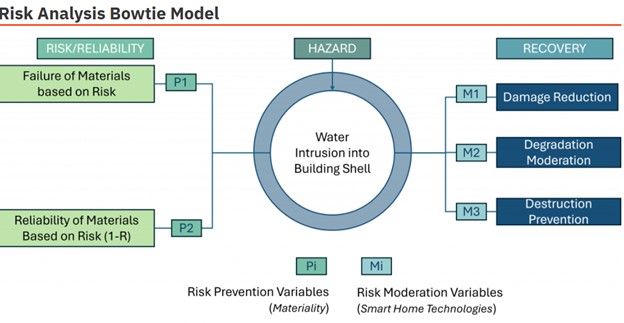
The RIPL Report focuses on the categories of building materials and smart home technologies. Building materials can impact insurance rates, and certain materials are associated with lower insurance premiums depending on their durability, fire resistance and ability to withstand severe weather conditions. Failures of building materials accounts for approximately 20 to 25 percent of home destruction during natural disasters. However, carefully selecting or updating building materials can enhance a home’s resilience. For example, if a consumer wants to learn more about a material’s durability against water damage, and its resistance to mold growth, Table 2 of the RIPL Report offers details by the type of material—guiding consumers on which materials are more susceptible to water damage and appropriately selecting the material that may best suit a home.
Installing smart home technologies can also be extremely beneficial for consumers when responding to hazards. Monitoring technologies, such as utility shutoff mechanisms for water, gas or electrical systems can allow homeowners to enable early detection and make quick, automated responses to avoid damage. There are also foundation monitoring systems that can assess structural integrity and soil conditions. The ability to identify unknown leaks with the first 30 hours of installation can improve homes and prevent long-term damage—60 to 70 percent of homeowners will identify an unknown leak with installing these devices. The RIPL report further states that incorporating water regulation and smart shutoff systems decrease water damage claims between 80 to 96 percent across various systems.
By implementing RIPL’s bowtie model approach of choosing resilient building materials and installing smart home technologies, consumers may reduce property damage and lower insurance premiums.
To download the RIPL report, click here.
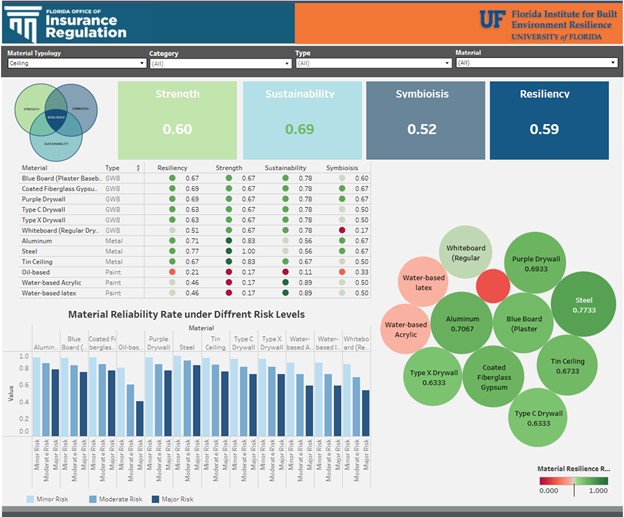
Another valuable resource for consumers is the Sustainable Adaptive Material Performance Level System (SAMPL). This database is an interactive digital platform where consumers can choose different building materials and compare performance under natural hazard scenarios. Each material presented identifies its measurable impact of material strength, sustainability, and symbiosis, reflecting the ultimate resilience of the product.
To view the dashboard, click here.
For
highlights on Florida’s insurance market, click here.